
In the conditions of modernity, the success of the Company directly depends on a competently formulated and developed business promotion strategy. Before we begin, we must define the terminology to clearly understand the subject of discussion and research, because many people define the concept of marketing strategy at their own discretion.
By marketing strategy we mean a systematic way of achieving company goals by selecting target markets and developing value propositions.
The essence of marketing strategy is the careful selection of the target market and the creation of a sound value proposition, which form the basis of the business model and serve as the guiding principles for the development of tactical actions.
SELECTING AND DEFINING THE TARGET MARKET
A target market is a specific group of consumers to which a company focuses its offer, promotion and service, considering it the most promising for achieving sustainable profits.
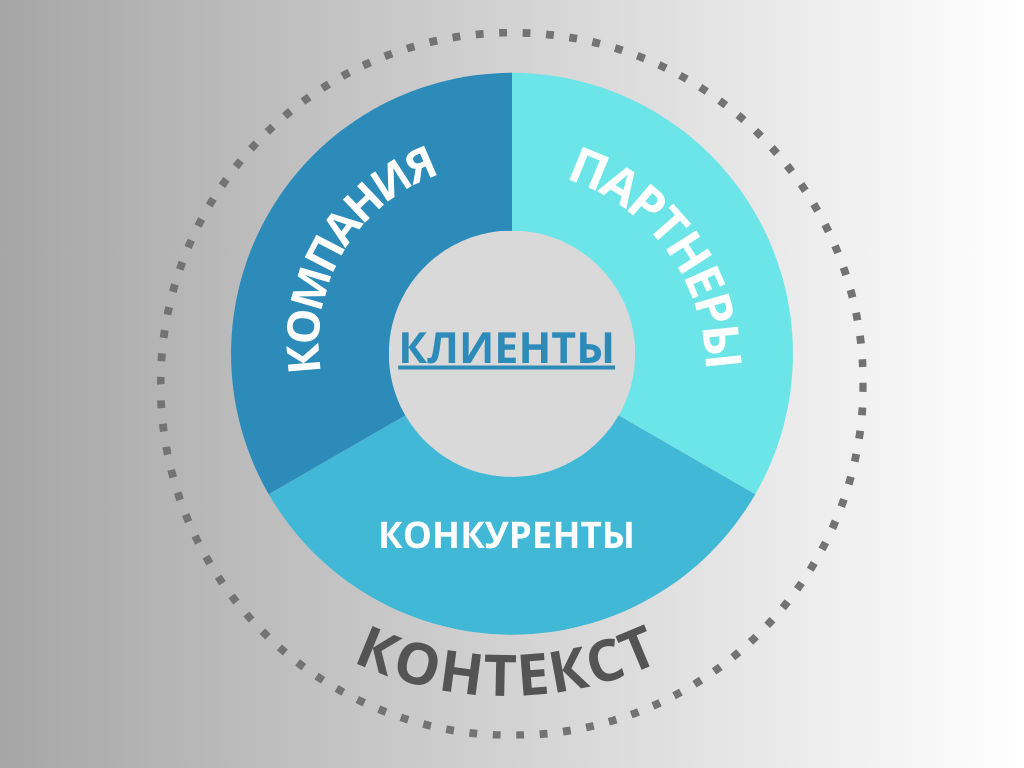
One of the effective models for analysis and decision making is the 5C model proposed by Philip Kotler. It includes five components: Company, Customers, Competitors, Collaborators, Context. This model helps to analyze in depth the internal and external factors that influence the choice of the most appropriate market segment.
- Company
At this stage, it is important to assess your own resources, competencies, unique advantages, mission and goals. Understanding the company’s strengths and weaknesses helps to determine which market segments are most relevant to its potential. - Customers
Customer analysis involves the study of needs, behavior, demographics, psychographics, and buying habits. This allows you to segment the market and understand where the need is greatest and the willingness to buy is highest. - Competitors
Assessing the competitive landscape helps to identify segment saturation, level of competition and opportunities for differentiation. Sometimes the right choice is not the largest segment, but the least competitive segment where the company can take a strong position. - Collaborators
A network of partners, including distributors, suppliers, logistics and other external resources, can both expand a company’s potential and limit its choices. When analyzing your target market, you need to consider which partnerships will help you reach your chosen segment effectively. - Context
Context includes external factors: the economy, technological trends, the legal environment, cultural sensitivities and political realities. Sometimes a market can be attractive from the customers’ point of view but risky due to the unstable environment.
Thus, the 5C model allows for a systematic and in-depth approach to selecting a target market, minimizing risks and increasing the probability of achieving a sustainable competitive advantage. Using this model, a company can make strategic decisions based not only on intuition, but also on objective analysis of the environment.
Scheme for selecting and defining the target market 5-C
Developing a Value Proposition: Creating Value for Customers, Partners and the Company
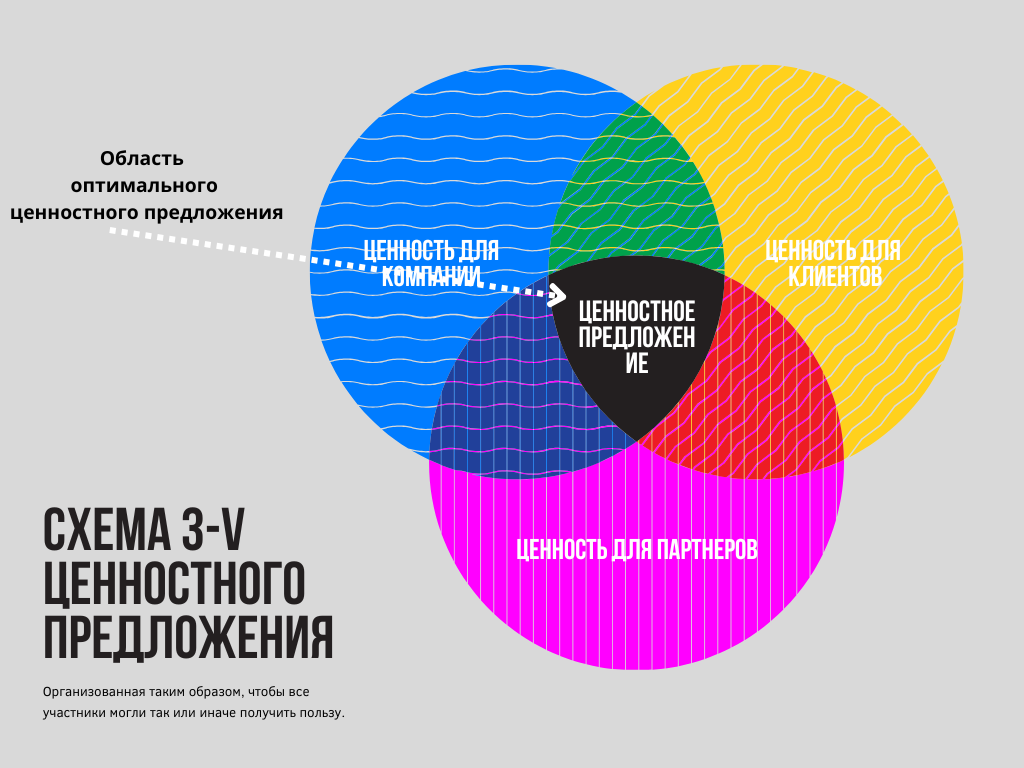
A value proposition is not just a marketing slogan or a unique selling point. In a strategic sense, it is the foundation of a business model that reflects how a company creates, communicates and retains value for three key parties: customers, partners and itself.
1. Value for the customer
At the center of any successful proposal is the solution to a specific customer problem. This can be a rational benefit (saving time, money, resources) or an emotional benefit (convenience, status, security).
Important: value is not shaped by the product, but by the customer experience – from first touch to post-sale service.
Example: a delivery service creates value not with food, but with speed, ease of ordering, and predictability of outcome.
2. Value for partners
Modern businesses increasingly exist in ecosystems – with suppliers, logisticians, contractors, platforms. For long-term success, it is important that the value proposition takes into account the interests of partners:
- favorable terms of cooperation,
- process transparency,
- opportunity for growth and scalability.
When associates feel they are not just a tool but part of the value chain, they become loyal and engaged.
3. Value for the company
Any value proposition must be viable from a business perspective – that is, it must generate revenue, enhance competitive advantage, and increase brand equity. This means:
- focus on what the company can do better than others (core competencies),
- optimal cost/profit ratio,
- Scalability and adaptability to change.
Thus, the value proposition is a balance between what the customer needs, what is important to the partners and what benefits the company. Only in this balance is a sustainable model born, where each side wins. This system logic allows not just to satisfy demand, but to build trust, create sustainable partnerships and move the business forward.
Exhibit 3-V of the value proposition
Conclusion
In a rapidly changing market environment, a company’s success increasingly depends not on the product per se, but on a deep understanding of its audience, partner ecosystem and its own strategic position. A well-chosen target market and a well-considered value proposition become the basis not only for successful sales, but also for sustainable development.
When a business is able to simultaneously create meaningful value for the customer, build mutually beneficial relationships with partners and provide strategic benefits for itself, it builds a strong competitive position and builds trust in the marketplace.
Thus, marketing strategy is not just a set of tools. It is attention to the essence of business, focus on long-term value and systemic thinking that unites the interests of all participants. It is this approach that allows companies not only to adapt to the challenges of today, but also to actively shape the future of their market.