
Marketing tactics in the G-STIC model: from strategy to action
In marketing, it is important not only to determine the strategic direction of the business, but also to be able to realize it through specific actions. This is why there is a tactical level of planning. Within the G-STIC (Goals – Strategy – Tactics – Implementation – Control) model, tactics is the bridge between strategy and its implementation.
What are marketing tactics?
Marketing tactics is a set of specific tools and decisions aimed at implementing the chosen strategy. If strategy answers the question “what do we want to achieve and with whom do we want to work?”, tactics answer the question “how exactly do we do it?”.
Tactical decisions include:
- Developing a market offer
- Management of the marketing complex
- Planning of communications and promotion channels
- Partner recruitment and logistics
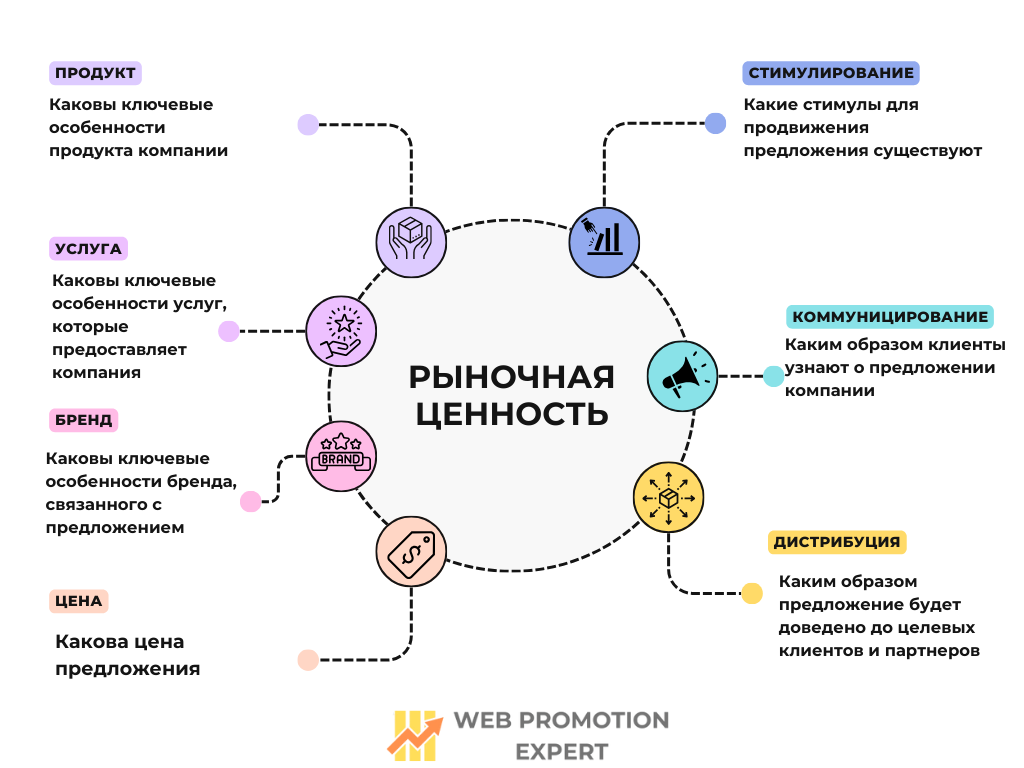
Market Offer (Offering)
A market offer is the totality of all the benefits and values that a company offers to its target audience. It is not just a product, but a comprehensive response to customer needs, including:
- Functional value (solves a specific problem)
- Emotional value (creates a certain feeling)
- Social value (emphasizes status, affiliation, etc.)
A good market offer is clearly positioned in the market, stands out from competitors and meets the expectations of the target segment.
Map of market value formation
Marketing Mix (4P model)
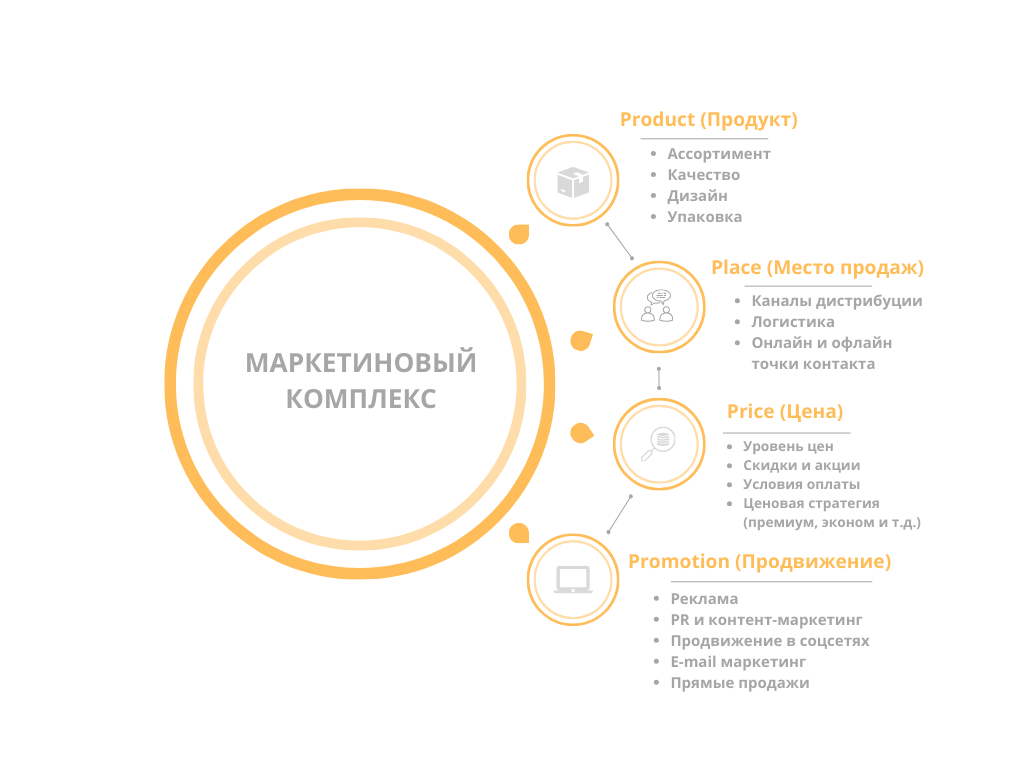
The tactical elements in the classical approach are combined into a 4P model:
- Product
- Assortment
- Quality
- Design
- Packaging
- Related services
- Price
- Price level
- Discounts and promotions
- Terms of payment
- Pricing strategy (premium, economy, etc.)
- Place of sale
- Distribution channels
- Logistics
- Online and offline points of contact
- Promotion
- Advertisement
- PR and content marketing
- Promotion in social networks
- E-mail marketing
- Direct sales
The 4P model allows for a systematic approach to the formation of effective tactics and ensures the consistency of all company actions.
Scheme of the 4P Marketing Complex
Tactics as part of G-STIC
Under the G-STIC model, tactics build on strategy and should be:
- Reasonable – fit for purpose
- Consistent – the components of the 4Ps must support each other
- Realizable – to take into account available resources and opportunities
Tactical actions provide direction for the Implementation phase and become the basis for subsequent performance monitoring (Control).
Conclusion
Tactics are the heart of a marketing plan. It turns strategic intentions into concrete steps that move a company closer to its goals. Understanding and properly utilizing tactical tools within the G-STIC model allows businesses to act consistently, flexibly and effectively.