
Customer value is defined as the perception of what the customer may perceive to be the benefit of a product or service compared to possible alternatives.
To begin with, business today is far from what it was in the twentieth century. Given the development of technology, consumer culture, deeper study of consumer demand in order to understand their desires and preferences, in-depth study of consumer psychology, it is becoming more difficult to do real business, because it is becoming more difficult to offer products that could arouse interest and, most importantly, the desire to buy and use. Hence, business operations, models and approaches become more complex and require more and more flexibility and a broad palette of knowledge to stay afloat and grow dynamically.
Whereas business used to be built around a product, its design, creation, promotion and sale to the consumer, by “pushing” it into the marketplace through the sales funnel, more and more strategies now start from the needs of a specific target audience.
Identifying the needs of the audience
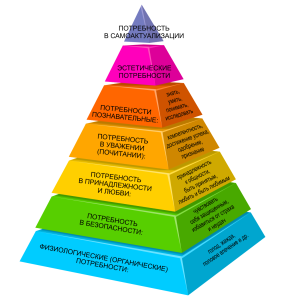
Building a business strategy and business model necessarily starts with identifying the needs of the audience. There are two approaches to identifying human needs:
- Maslow’s pyramid
- Types of needs according to Tumberg-Badyin. The model of 8 motives.
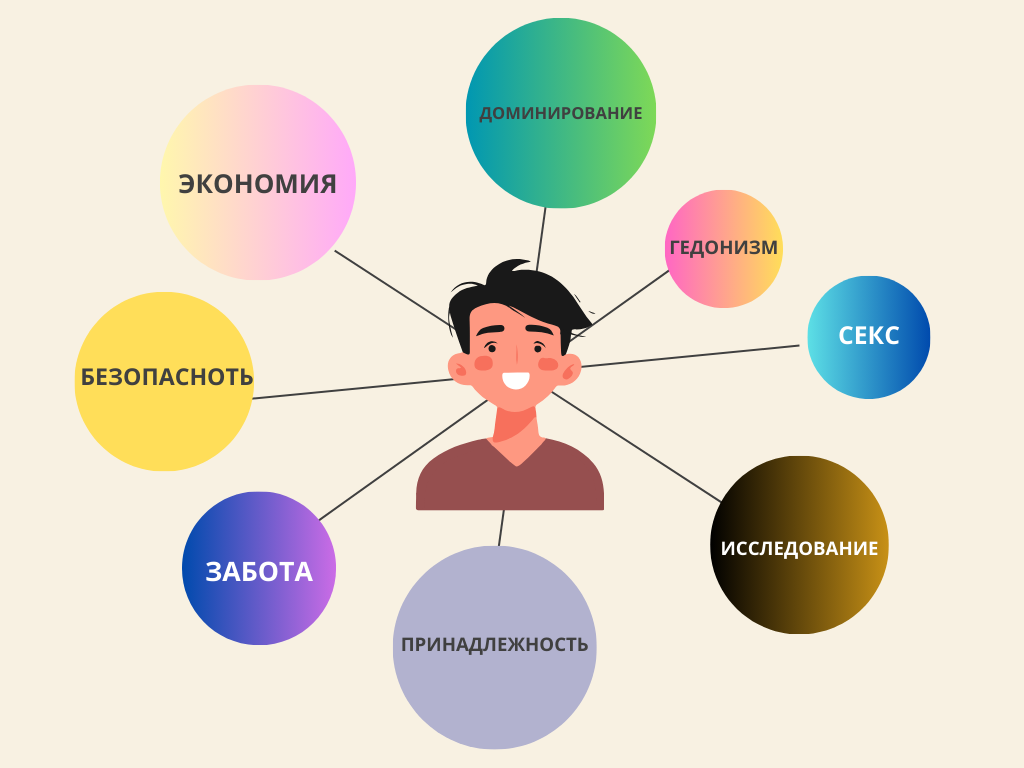
Here the needs of the individual are clearly demonstrated, according to his level of material, moral, moral, and temperament and ambition.
First, you need to define the segment of your target audience that will be impressed by your value proposition. And adopt a certain “point of reference” from which the value will be formed. For example, economy-class and premium-class products each have their own attributes, and each class has its own point of reference in terms of audience, quality, design, and price.
Study thematic forums, magazines, literature, get into the philosophy of your segment, analyze what people are missing, fully immerse yourself in the details.
Compete not in the Price zone, but in the Value zone
Creating Product Value
Once you have developed and thought through the strategy and tactics for approaching the customer and understood their true values, you need to focus on the product itself and creating its value. There are a number of criteria that are important to focus on when creating a product:
- Design
- Packaging
- Functionality
- Features
- Efficiency
- Customization
- Price
We will not dwell separately on each property, as a separate article can be written on each one. All these attributes of a product should distinguish it from its competitors, so it is necessary to thoroughly work out each point with specialists, test and constantly improve, so that the product remains in demand and has the ability to scale.
Services
Another key value driver is. Services around the product. Many marketers argue that selling a product is just an excuse to sell services. Take, for example, car dealerships that sell cars. The lion’s share of their revenue consists of providing car maintenance services. You can create a “service loop” around almost every product that will differentiate you from your competitors, from delivery to disposal. Some companies in the B2B market provide equipment to customers for free and provide paid maintenance services. In the context of commoditization (depersonalization) of goods, you can differentiate yourself by providing high quality services.
Brand
Brand – Another “whale” on which value rests.
You need to focus on Positioning of the brand.
Positioning is a set of activities to develop the offer and create the image of the company, aimed at taking a special place in the minds of the target audience.
The goal is to embed the brand in the minds of consumers so that it helps to maximize the potential benefit to the company.
A strong brand is a company’s fundamental asset. Work on developing, positioning, and strengthening the position of a brand does not stop for a minute. Many companies pay huge sums of money to have their brand represented at sporting and cultural events and forums. They regularly conduct various social programs, allocate funds for scientific research, thus trying to demonstrate their position and attitude to certain events and show their audience their involvement.
Conclusion
Creating value is not a one-time action, but an ongoing process that requires flexibility, attention to detail and a deep understanding of customer needs. Companies that recognize this and build a value-driven business gain not just customers, but loyal brand advocates.
Real wealth is not the possession of resources, but the ability to create an ecosystem of value around them. Those who understand this today will become market leaders tomorrow.
In the 21st century, success is determined not by structural and financial resources, but by the resources of relationships with customers and partners, as well as intellectual resources – specialists and human capital. Today, the wealth of a company is information and access (not ownership, but access) to the best assets!
Web Promotion Expert
Подписывайтесь на наши соцсети. Задавайте вопросы